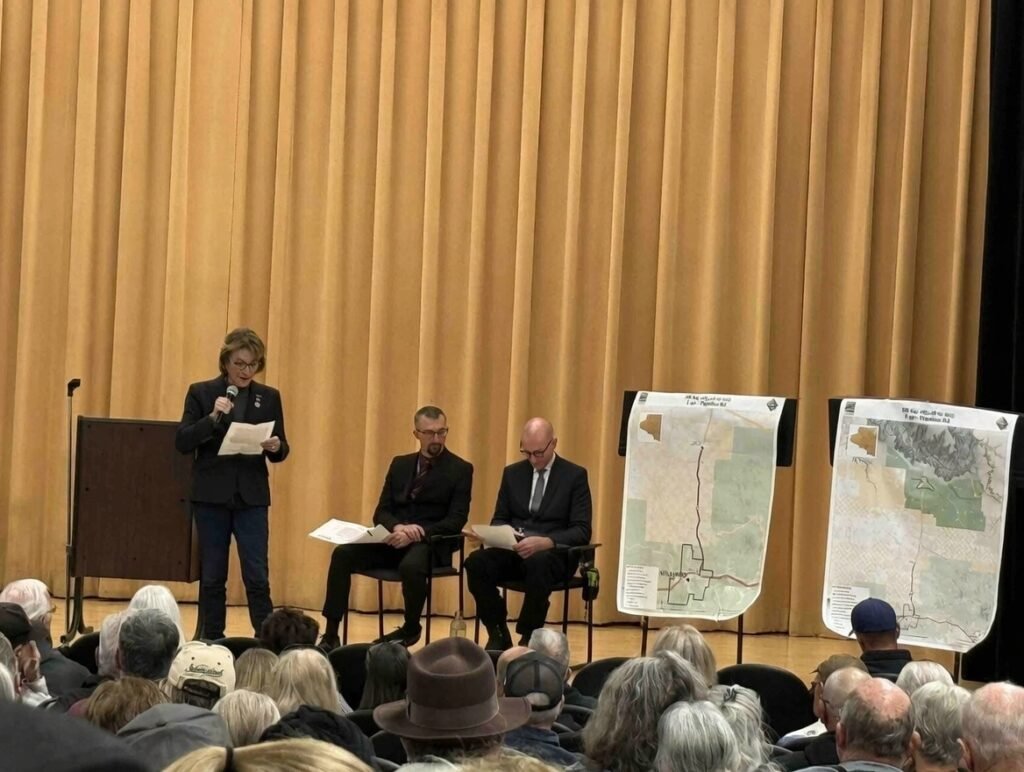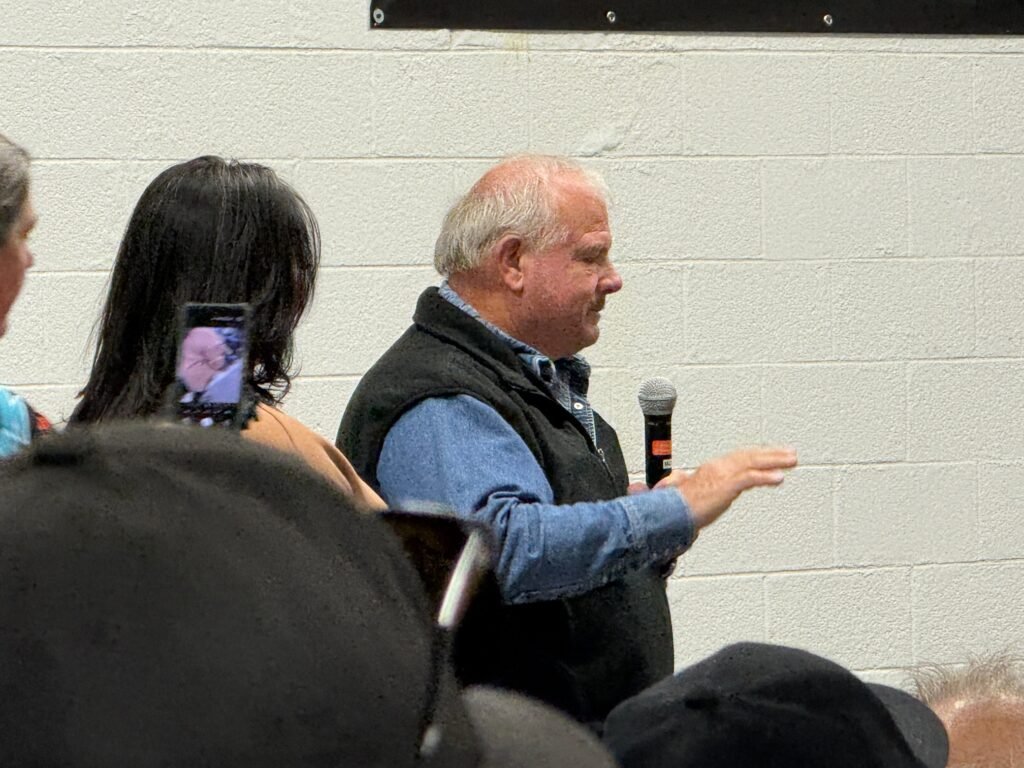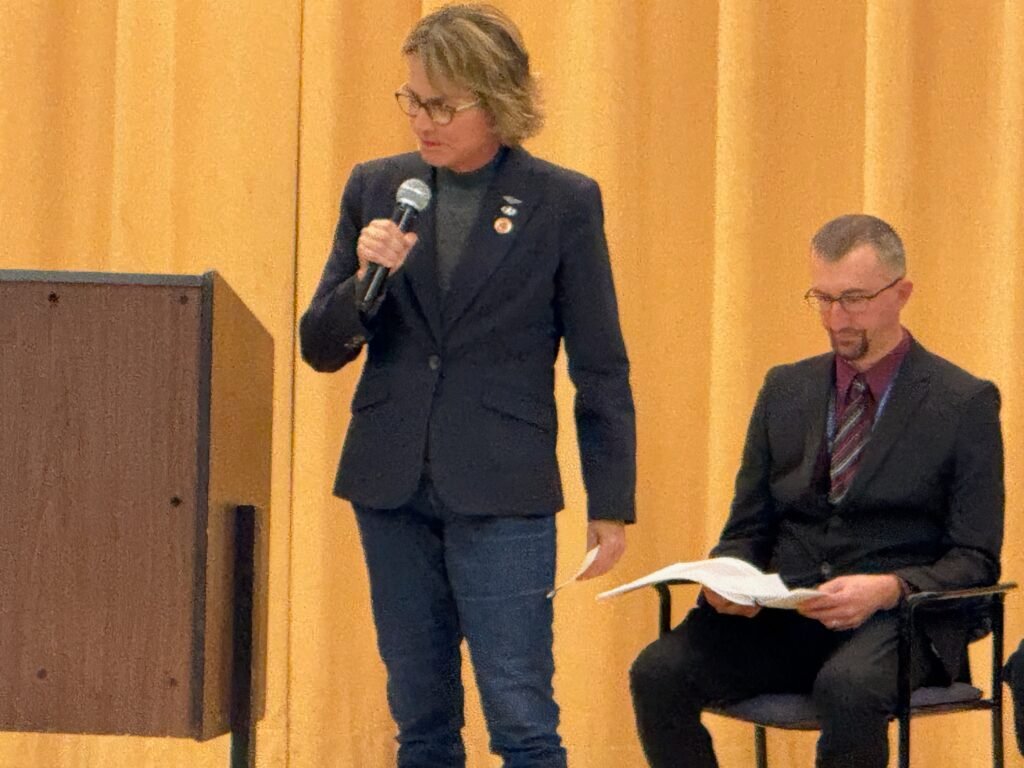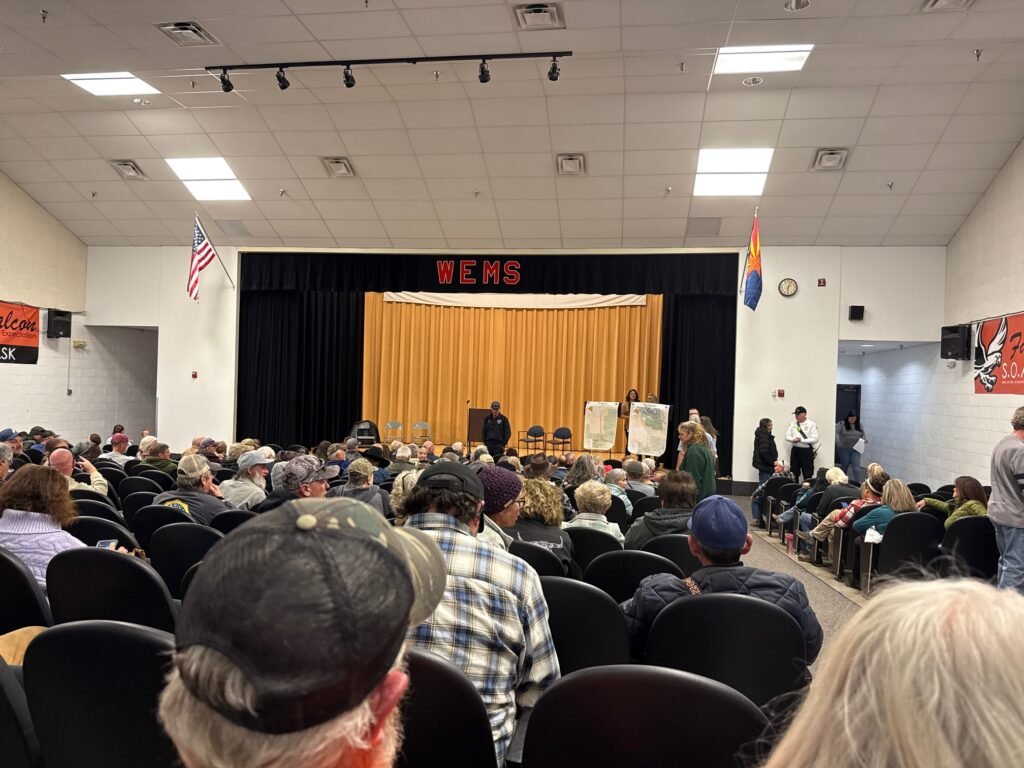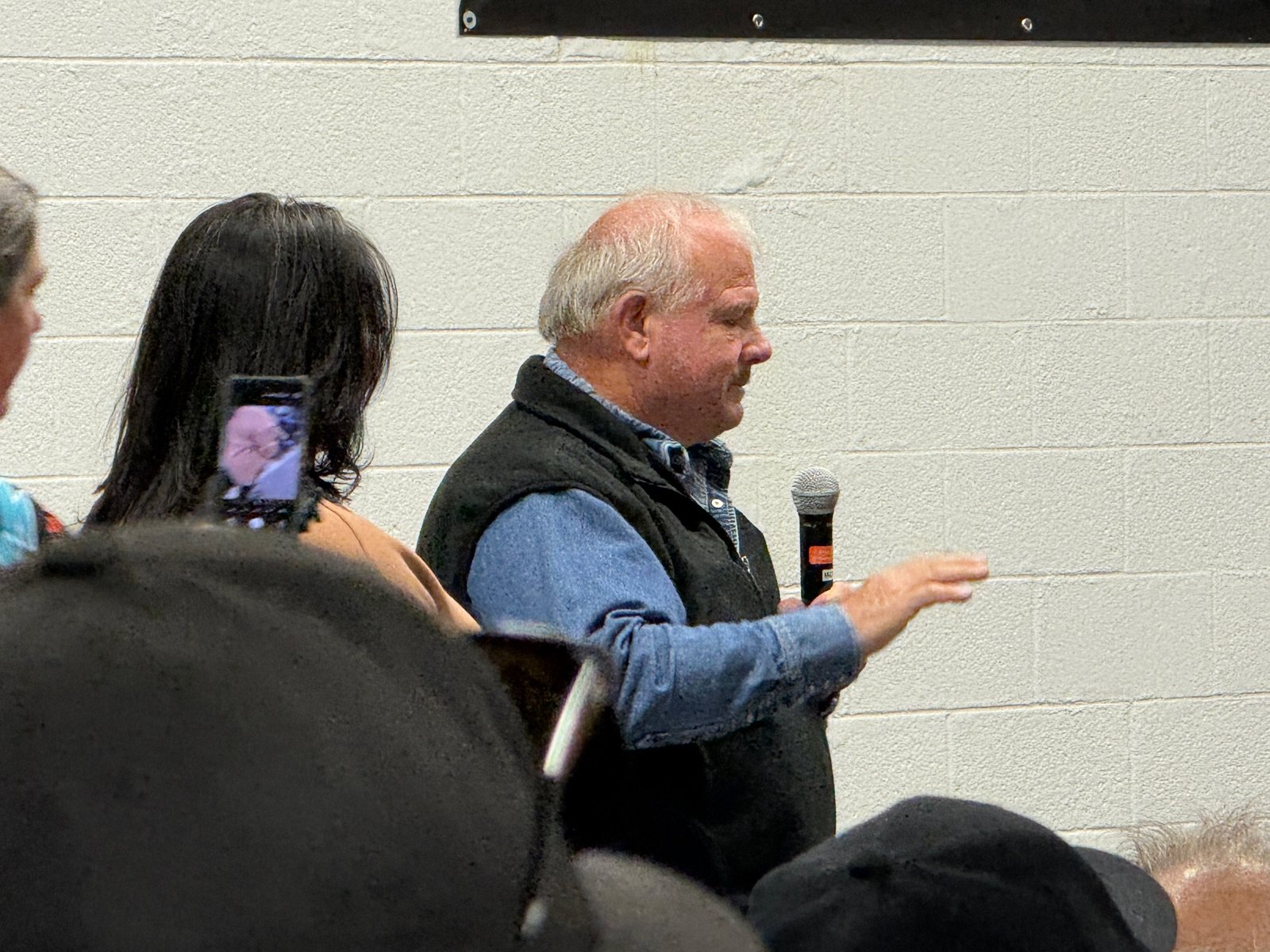

An impromptu Sunday afternoon meeting to discuss safety on Highway 64 announced seemingly at the last minute by State Senator Wendy Rogers left many residents frustrated after it became obvious that ADOT planned little more than minimal upgrades to the highway.
Many leaving the meeting wondered why it was even called given the lack of substantial new information presented. Some speculated it was more of a campaign event by Rogers who is running for re-election.
The Arizona Department of Transportation representative, Jeremy DeGeyter, told the audience that agency put a project out for bid that will rehabilitate pavement and add turn lanes along the first 21 miles of Highway 64 from Interstate 40 to Pipeline Road. ADOT opened bidding on the project on Jan. 9 for the work that includes milling existing pavement and replacing it with stone matrix asphalt designed for longer surface life.
Many recent “pavement rehabilitation projects” along Interstate 40 in the last 2 years are already falling apart as Arizona notoriously chooses the lowest cost methods to restore pavement. It remains to be seen if this project will be a serious resurfacing of the roadway, or simply “throwing some rocks down and spraying them with black paint”, as one resident somewhat jokingly remarked.
Arizona is known to use low cost and short lasting methods to “rehabilitate” pavement unlike many states that actually fully resurface roadways for longer lasting and higher quality results.
A lack of firm data about the accident rates on Highway 64 make gauging the relative safety of the highway problematic. The available data makes determining the actual dangerousness of the road difficult to quantify.
Publicly available aggregated traffic accident data from the Arizona Department of Transportation (ADOT)’s annual Motor Vehicle Crash Facts reports (covering statewide totals through 2024) does not provide detailed breakdowns or rankings by individual state routes like SR 64. These reports focus on overall trends, such as:
- Statewide totals (e.g., in 2024: ~121,107 crashes, 1,228 fatalities; in 2023: ~122,247 crashes, 1,307 fatalities).
- Broader categories (e.g., state highway system vs. local roads, urban vs. rural, alcohol-related, speeding).
- No specific per-route crash counts, fatality rates, or safety rankings for SR 64 (or most individual highways) appear in the summaries or main sections of recent reports (2023–2024).
ADOT’s crash data is compiled from law enforcement reports statewide, but detailed route-specific statistics (e.g., crashes per mile, fatalities per vehicle miles traveled) are not published in the public annual summaries for most routes. More granular data might exist in ADOT’s internal Crash Reporting Information System (CRIS) or upon specific request, but it’s not openly accessible in the standard reports or dashboards.
From secondary sources and analyses (e.g., law firms, news, safety discussions drawing on NHTSA/ADOT data):
- SR 64 frequently appears in lists of Arizona’s more dangerous or riskier roads, often ranked in the top 5–10 for concern due to its characteristics rather than always topping statewide fatality counts.
- Common contributing factors cited include:
- High speeds (often exceeding limits, with averages reportedly around 80 mph in some sections).
- Mix of large trucks (freight/commercial) and tourist vehicles (many drivers unfamiliar with the route, mountainous/curvy terrain in parts, distracted or inexperienced).
- Heavy seasonal tourist volume (up to 6+ million visitors/year to the Grand Canyon, leading to congestion and variable driving behaviors).
- Rural two-lane design with limited passing zones, elevation changes, and occasional adverse weather.
While many at the meeting, including the Mayor of Tusayan, want to see a divided 4 lane highway replacing the existing road, there is simply no reality whatsoever to that actually happening in the next few decades. The first problem is the right of way does not exist despite the Mayors assertion that ADOT already owned it. ADOT does not own the additional right of way needed along most of the route. It could require a massive and costly eminent domain seizure of private land that could be fought in the courts for years.
The second and more difficult problem is that the cost of building a 4 lane road would easily exceed 3 billion dollars. A 4 lane roadway would require significant and costly engineering, grading, bridge and culvert construction, as well as the enormously expensive road building. It simply is not going to happen with Arizona’s budget realities and the dire need for road improvements statewide.
While the data is not sufficient to fully determine the actual safety profile of the highway in terms of traffic counts, or total miles driven, it is clear that Highway 64 is not as safe as it could or should be. The data does however point out that many crashes are occurring in the more populated few miles at the highways south end, roughy from Kaibab lake to Buck Mountain Road.
While major road improvement are likely decades away, this ADOT project does at least start to address some issues in the areas most in need of improvement. None of these however will likely reduce animal related or weather related crashes that are common to the area.
Rogers urged resident to put pressure on elected officials to gain more funding for future projects. She also asked residents to go to her website to sign her petition to run for re-election which may have been what prompted many in attendance to question the real purpose of the hastily called Sunday afternoon meeting that reported no significant upgrades to the highway beyond pavement rehabilitation and some new turn lanes.